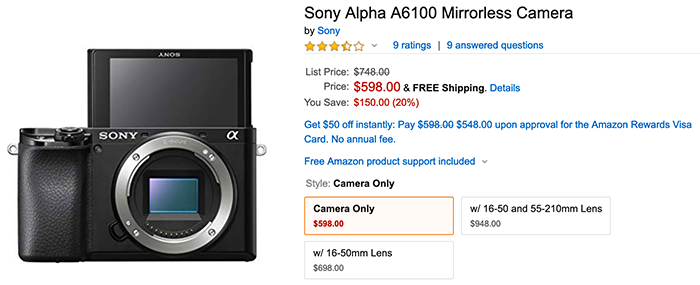
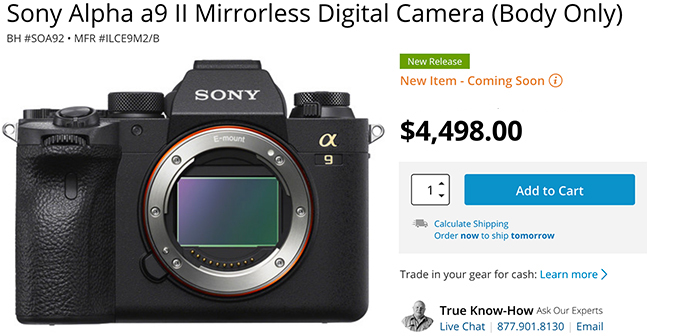
I do agree with Steve Dent from Engadget when he says the A6400 and A6600 are somewhat underwhelming considering the competition. And I also agree when he says that the A6100 is an exception: At this price point it’s the best camera to get mainly because it’s terrific autofocus performance:
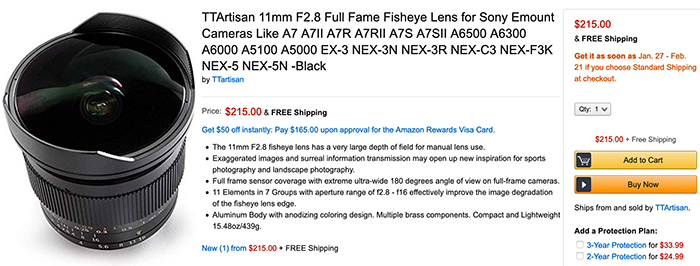
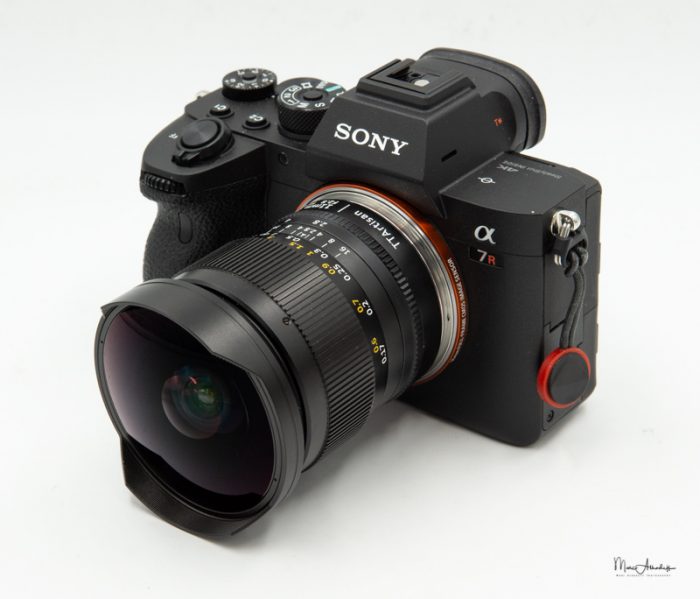
The new TTArtisans 11mm f/2.8 FE fisheye lens got tested by Marc on SonyAlphaBlog:
The TTArtisans 11mm F2.8 Fisheye (300 euros) is a Compact stereographic fisheye with very good sharpness on the entire frame when used outdoor at F5.6 , and even excellent at F2.8 in the centre for close subject
Its closest competitor the Samyang 12mm F2.8 ED AS NCS Fisheye (450 euros) offers a slightly wider field of view (even if given at 12mm, it is wider) , a better sharpness in the corners at F2.8 but a more nervous background blur , it is much more bulky and the build quality is lower (all plastic)
Pros
Excellent sharpness in close up
Very good sharpness on the entire frame at F5.6 and very good in the centre at F2.8
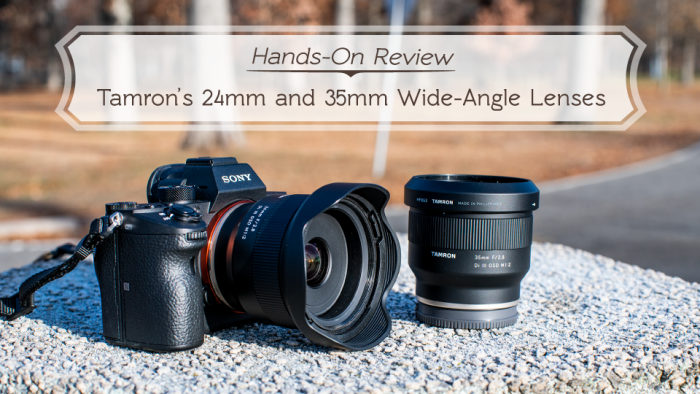
As the accompanying photographs clearly illustrate, the close-focusing ability of these wide-angle lenses greatly expands the creative possibilities of whatever your subject matter may be. Both display a bit of vignetting at wide aperture, which diminishes as you stop the lens down toward f/8. And while these f/2.8 lenses may not be speed queens, they are sharp—very sharp. Autofocusing was fast and accurate, though in my opinion, a bit noisy for video applications. This might prove to be a deal breaker for potential video-oriented consumers.
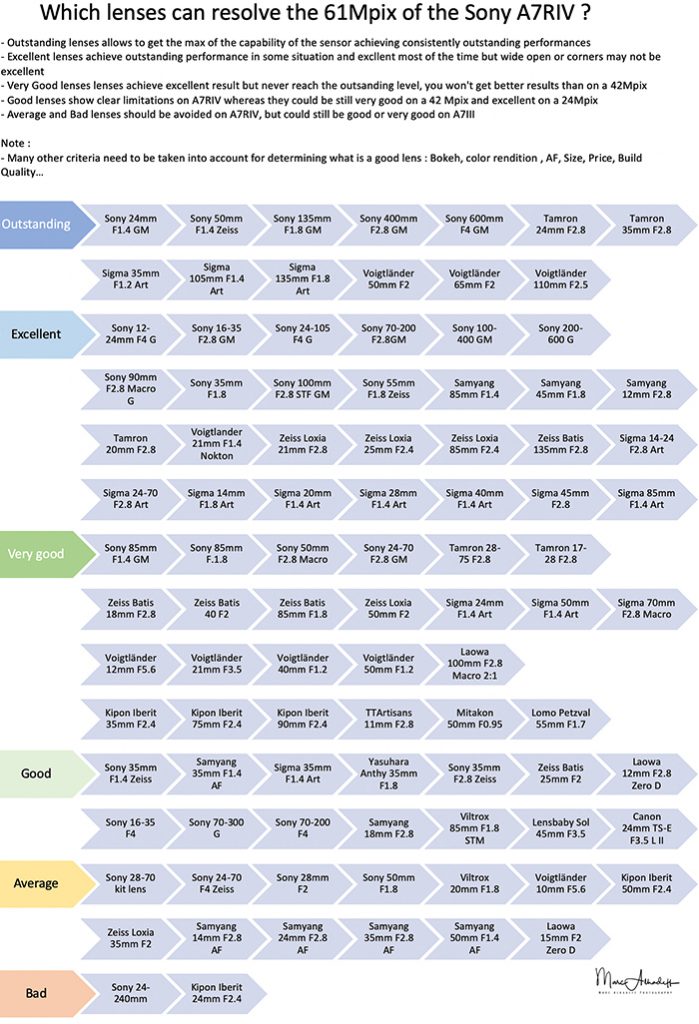
Marc Alhadeff made this graph showing the best lenses to achieve maximum sharpness for your Sony A7rIV. Marc is known for making a ton of FE lens reviews and is one of the few that can therefore give you this complete overview!
So technically speaking the best lens I do own is the Sony 85mm f/1.8 FE…maybe it’s time for me to consider to get at least one lens of the top pool :)
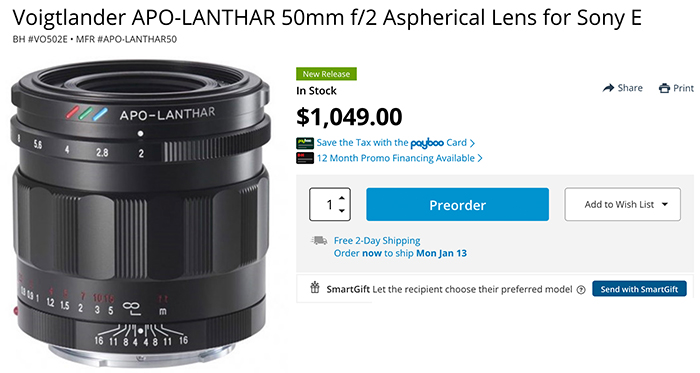
The Voigtlander 50mm F2 APO-Lanthar is among the optically most perfect lenses on the market right now. Not only does it show excellent sharpness and contrast across the frame from f/2, it also lives up to the APO-label and corrects CA to a degree where it is a no issue even in demanding images. Bokeh is well above average for a 50mm lens. Distortion is another non issue and flare resistance among the best in class. Other lenses have a little smoother bokeh but most of the time the 2/50 APO’s bokeh is unobtrusive. The only thing that is average about the APO-Lanthar is its vignetting which is a small price to pay for this level of performance and compact size.
But the Voigtlander 2/50 APO doesn’t only deliver an impressive optical performance, it also is one of the most pleasant to handle lenses I have ever used thanks to a relatively small size, well thought out design and excellent mechanics. I only wished Cosina had also added weather sealing since Sony camera’s have improved a lot in this regard and any other lens in its price class offers it.
The designers of the Voigtlander 50mm F2 APO-Lanthar are right to be proud of it. It currently sets the standard both for optical performance as well as for handling. For such a high performing lens the price is very reasonable but of course still high for a 2/50 lens.
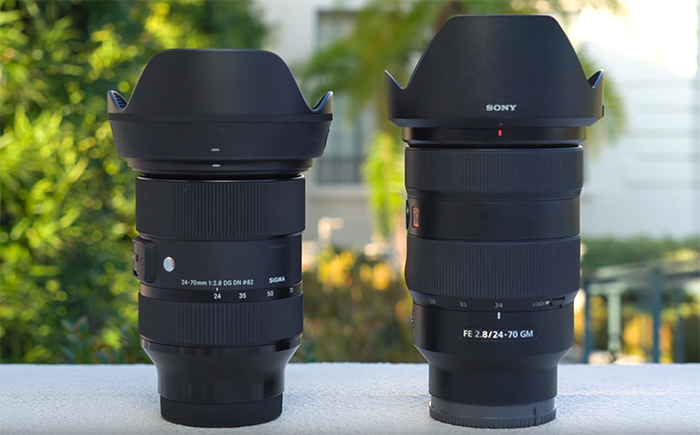
CameraLabs posted the full Sigma 24-70mm f/2.8 FE review and concludes:
The Sigma 24-70mm f2.8 DG DN Art is a viable alternative to the original 24-70mm f2.8 lenses from Sony and Panasonic – not to mention Canon and Nikon, should Sigma develop RF and Z-mount versions. Although the lens comes at a much lower price Sigma has designed it well: The lens is sharp within the APS-C image-circle, has no longitudinal color aberrations, shows little veiling glare in contra-light situations, and has a reliable autofocus. Unfortunately the Sigma becomes gradually softer at closer focusing distances right down to pretty mushy results at minimum object distance. This may make the lens miss out on our top award, but it still clearly earns a recommendation.
Good points:
Constant f2.8 focal ratio.
Sharp and contrasty in the APS-C image circle.
Good black levels in contra-light situations.
Reliable AF operation
Can swap mounts (at a cost) between Sony E and Leica L-mount.
Bad points:
Field curvature and softer performance at closer distances.