





Latest Sony sensor improvements

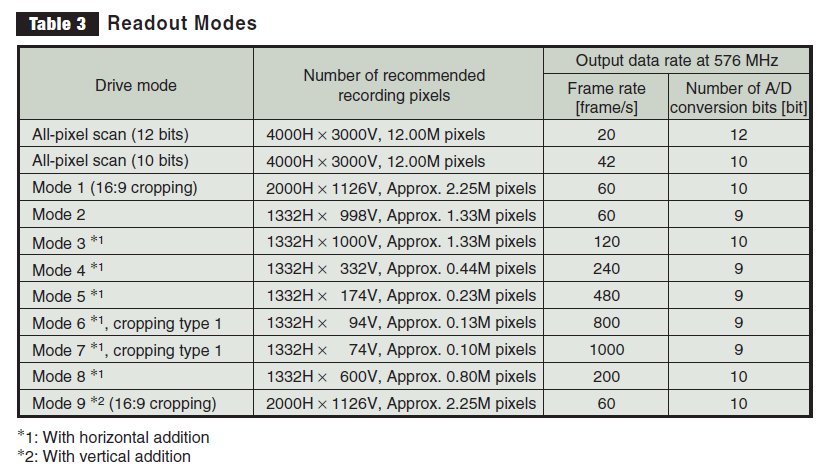
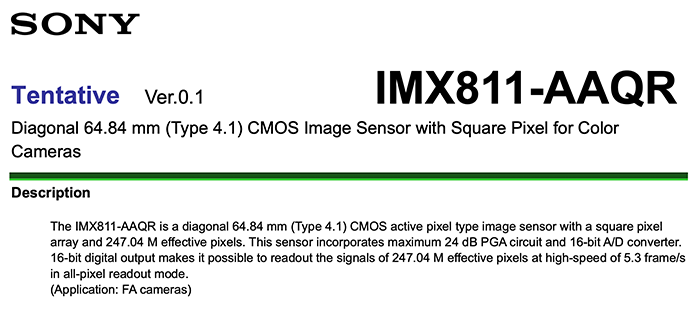
Data of the new 1/2.3-inch 12MP, 1.55um Pixel BSI Sensor form Sony
There are some news for our tech-freak readers
Sony developed the next generation of CMOS Sensor that can “convert multiple pixels into signals simultaneously which results in a reduction of the conversion time by up to 75% when compared to existing sensors“. The new sensor has a five time greater processing speed (up to 34.8Gbps) and can shoot video with 17.7MP at 120fps (Source: Crunchgear).
Sony is also working on new tiny sensors fro smartphones and compact camera (1/2.3-inch). They just announced a 12MP, 1.55um Pixel BSI Sensor providing 42fps at full resolution (1080i60). More info at ImageSensorWorld.


mike_2008
3 years ago |This looks like a global shutter.
Edgars
3 years ago |It is global shutter!
I think global readout for 12Mpix CMOS is really groundbreaking tech. Suppose it will change photo and video industry.
Carlos R B
3 years ago |What benefits does a global shutter bring? thanks…
Photongraph
3 years ago |@ Carlos R B
very easy:
with a global shutter you wouldn’t have got the problems of rolling shutter and wobble effects. You will have got with a global shutter great benefits in the sensor read out for video recording espacially.
Normal CMOS with rolling shutter, read video/pictures in line to line, which results in ugly distortion etc., when you e.g. move the camera.
For more information about global shutter and rolling shutter, read this website:
http://www.dvxuser.com/jason/CMOS-CCD/
But i am not really sure, if Sony has developed really a global shutter CMOS sensor, this would be a groundbreaking innovation in mainstream consumer market.
Photongraph
3 years ago |I think too, when you read this: “Sony’s device can “convert multiple pixels into signals simultaneously”, which results in a reduction of the conversion time by up to 75% when compared to existing sensors.” (Source: http://www.crunchgear.com/2011/02/25/sony-develops-next-generation-cmos-sensor/)
This means you can read out nearly all the pixel informations for HD Video recording and future higher k resolution video/film standards, with such a sensor you can easily create 4-8k video recordings, without much losing of resolution and detail informations.
And you won’t have got the problem of aliasing effects and moires etc. caused by line-skipping / pixel binning (best example is the Canon EOS 5D Mark II with line skipped/pixel binning during HD video recording: http://www.fxguide.com/quicktakes/f3-vs-5d-mkii/), where normal CMOS sensors don’t use every Pixel in a Bayer pattern sensor array for HD recording and just skipp much out, which results in bad real world native resolutions, which surely not reach the maximum of HD video capatilities of 1080 lines.
read more about pixel binning/line skipping here:
http://learn.hamamatsu.com/articles/binning.html
Or am i false?
Milos Janata
3 years ago |1332*600 200 fps at 10 bits :] Are they available yet? 1/2.3 means pocket camera:]
SVOR
3 years ago |Impressive stuff indeed but I am not quite sure about the global shutter mike_2008. Fast read-out is not quite the same as global shutter though it may be one mitigation of the problem. But I may be misunderstanding things.
PhotoNut
3 years ago |The Sony A77 will probably be using the new 120FPS capable 17.7Mpixel CMOS image sensor from Sony
saiman
3 years ago |I really hope Sony puts this into the A77… and we can say bye-bye to the rolling shutter problems!!
I believe if Sony can fix the rolling shutter issue, it will give A77 the real edge over all Canon dslrs for video!!!!
Soulnibbler
3 years ago |Not global shutter, just fast readout.
best security cameras
4 weeks ago |Hey there! This is kind of off topic but I need some help from an established
blog. Is it very hard to set up your own blog? I’m not very techincal but I can figure things out pretty fast. I’m thinking about creating my own
but I’m not sure where to begin. Do you have any points or suggestions? With thanks