Sony talks about the future of the Alpha business: New sensors coming and more “innovative” lenses!

Sony published a new corporate report that is highly interesting

1) New sensor tech is coming!

Sony has made it clear that it is currently working on a newly commissioned advanced process technology. This will enable the production of the new multi-layer stacking (three layers). In addition, the global shutter sensor technology for mirrorless cameras is to be improved.

Here is their official text about this:

An additional trend that is expected to drive further evolution of characteristics is increasing density. Higher density is realized by process node adaptation through a newly commissioned advanced process technology, and by multi-layered stacking (three layers), which has been achieved through the evolution of the I&SS segment’s strengths in stacking technology. The segment will aim to achieve further business growth by harnessing these two technologies to increase the value of its sensors.
With regard to image sensors for interchangeable-lens cameras, in particular, the segment’s global shutter technology has garnered strong interest within the industry, and it is promoting further development through close collaboration within the Group.
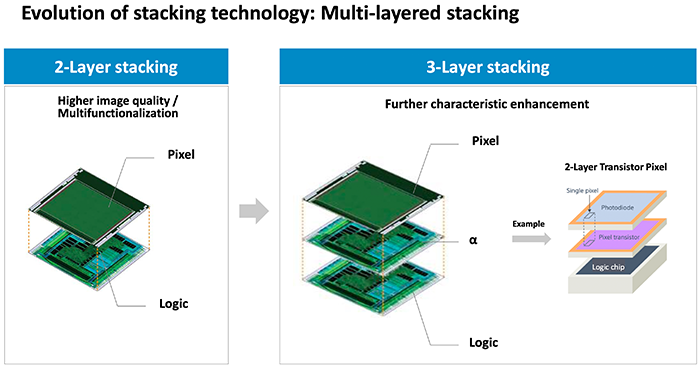
The article about the new Sony 3-layer stacking sensor can be read here on SAR.

2) New innovative lenses coming!

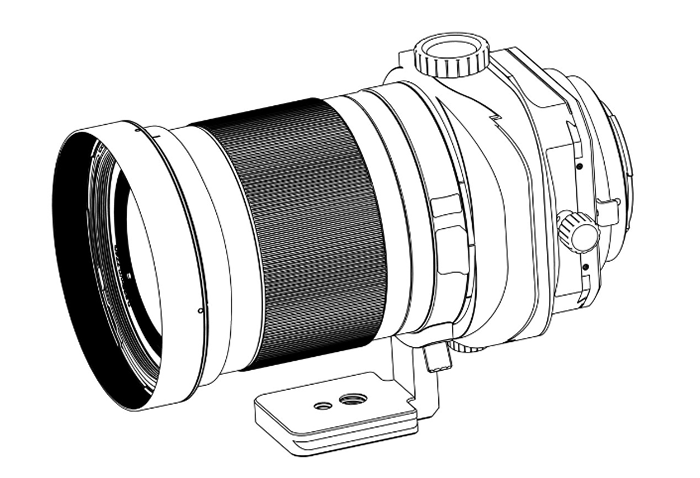
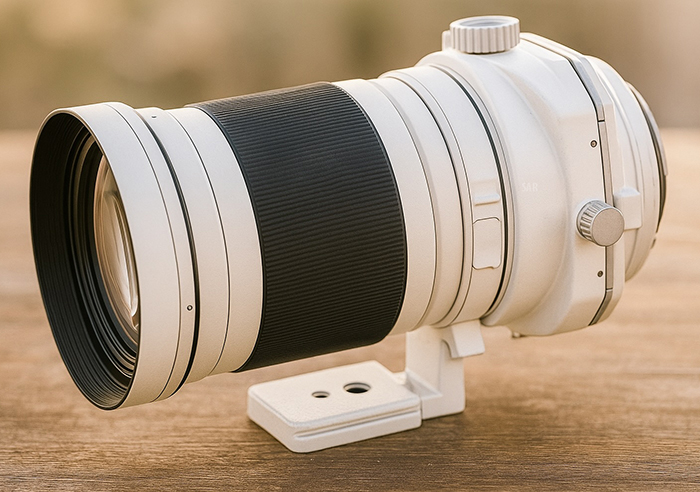
Lenses such as the new Sony 50–150mm f/2.0 GM are optical masterpieces and something that no other company has attempted before. Sony made it clear in its presentation that we can expect more of the same:

The segment plans to enhance the expressive capabilities of increasingly diverse creators through initiatives such as advancing imaging technology through the development of proprietary sensors with the I&SS segment and expanding its lineup of innovative lenses,

3) Business goal in the Entertainment business:

In terms of business figure targets, the segment (Entertainment, Technology & Services) aims to increase the share of the highly profitable Area Expansion and Business Growth/Generation categories by 10 or more points from FY2024 to FY2027, accelerating the shift in its business portfolio. By FY2027, the segment aims to see an operating income margin of 10% and FCF of 160 billion yen.

Our reader and tech expert George M told me this:

My interpretation of these documents is that Sony is choosing to stick to its 24-26 mid term plan that we have previously seen but is now confirming investments into the next phase. Sony Entertainment is actively pursuing the development of new proprietary sensors, which on it’s own doesn’t mean much if it were not for the fact that Sony I&SS states that it’s working on a newly greenlit “advanced process technology” that uses three-layered stacking and that it is further developing global shutter sensors.

This is amazing news and we can likely expect to see products begin to arrive in the next couple years (fingers crossed for 2027). Additionally, Sony says that it is “Pivoting imaging business products like cameras and services toward content creation”. I think this means we can expect these new global shutter cameras to become available at “content creator” price points.

My take:

Yesterday I published an article about the Sony FX lineup manager saying hat we just need a little patience—Sony has some big upgrades and surprises on the way. Their business plan already confirms that new sensor technologies, including 3-layer sensors and global shutters, are in development. This makes me think that by the second half of next year we could see cameras with truly innovative sensors, offering performance that will be unique and unmatched by the competition.

I also really like Sony’s ongoing commitment to pushing boundaries with new lens designs. If their track record is anything to go by, we’re in for some exciting releases—I honestly can’t wait to see what’s coming!

Sony manager about the future Cinema Line products: We want to go beyond expectations for the customers!

In an interview published by CineD the leader of the Sony Cinema Line, Nobutatsu Takahashi-san said this about the future of the lineup:

Sometimes it takes time (to release new products) when there is a huge revolutionary change. We still need time to offer something new but we are trying our best. I want to go beyond expectations for the customers

This all sounds promising, but I really hope it won’t take too long. The Sony FX3 is struggling against the newer Canon C50 and Nikon Zr, which are both cheaper and generally perform better. On top of that, there’s still a strong need for proper updates to the FX6 and FX9—but I’m not sure if those will ever come.

Surprise: New Viltrox(?) 35-50mm f/1.4 Full Frame zoom coming in 2026?

A world’s first, the 35-50mm f/1.4 FE:

A new rumor circulating on Chinese social media platform Weibo hints at a groundbreaking full-frame zoom lens set to arrive in 2026: a 35–50mm f/1.4. Reportedly developed by a well-known Chinese manufacturer—possibly Viltrox—this would mark the first-ever full-frame autofocus zoom lens from a Chinese brand.

If true, this lens could steal the spotlight by offering an f/1.4 constant aperture—surpassing the current title holder, the Sigma 18–35mm f/1.8, as the fastest zoom lens available. While the 35–50mm range is relatively narrow, such a lens could effectively replace two key primes: the Sony 35mm f/1.4 GM and the Sony 50mm f/1.4 GM. It’s an ambitious move that, if real, would signal a bold leap forward for Chinese lens makers on the global stage.

One more thing:

It is reported that several Chinese optical brands are actively working on autofocus zoom E-mount lenses, with current reports pointing to at least five in development. The Weibo account reports that according to a senior executive from one Chinese manufacturer, a major milestone is on the horizon. By 2026, we can expect a wave of new autofocus zoom lens releases from various Chinese brands. These lenses—developed through in-house innovation, strategic imports, or acquisitions—represent the culmination of years of progress in optics, including advancements in glass formulation, autofocus algorithms, coatings, and motor technology.

And now let me know in the comment system if you would actually be interesting in owning a 35-50mm f/1.4 FE lens!

Sigma CEO Yamaki about the 15fps limitation

From minute 44 you can see Chris asking Sigma CEO Yamaki about the Sony limitation of 15 frames per second. Yamaki cautiously replies that it is difficult for him to comment on this and that of course he hopes this will change in the future.

I hope Sony realize that they are hurting themselves by imposing such a strict restriction.

The full interview can be followed from minute 20 to 55.

Sigma lens preorders:
300-600mm lens at BHphoto. Amazon. Adorama. FotoErhardt. Fotokoch. WexUK.
16-300mm at BHphoto. Amazon. Adorama. FotoErhardt. Fotokoch. WexUK.


There is no new Sony A7sIV coming any time soon…is this the end of the entire “S” lineup?

Folks, it’s time to get serious about the next generation of new Alpha cameras. Over the past few weeks, I’ve had several conversations with sources both familiar and new. And they all have the same leitmotif: no one has heard of a possible new Sony A7sIII successor. Now, I’m not omniscient, so maybe Sony has been keeping this super secret and the As7IV will be announced tomorrow :)
But realistically, I don’t think there will be an A7sIV anytime soon…. and now I’m wondering if the “S” series won’t be discontinued. I see the possibility that the future FX3II will be the official upgrade for the current FX3 and the A7sIII. What do you think about that scenario?

BIG Alpha camera teaser:
All those sources shared some reliable and some unconfirmed info about three kind of cameras: Sony A1II, Sony A7V and a “surprise” model. Not saying yet they are coming very soon…but certainly within 6-8 months. And you can expect me to share some info about that in the next days. If you have more info about the next Sony cameras and lenses you can share send me a message using this contact box or at sonyalpharumors@gmail.com. Thanks!

To not miss any new rumor subscribe our newsletter and social networks:

Subscribe to our newsletter and join 4,875 other subscribers.
*Please also check your spam folder if you don’t get the confirmation mail. And mark the mail as “non-spam” to see the future newsletter.

Social Networks:

By subscribing you help me to motivate working on SAR, by making sure my exclusive rumor work get proper credit and visibility. Thank You All folks!

Amazing: Sony just announced a new 247 Megapixel medium format sensor!

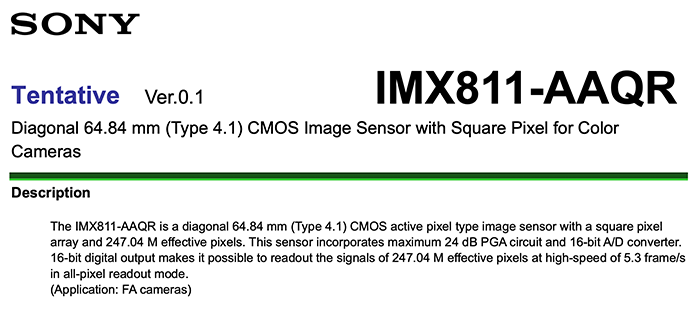
Sony just released the full details for a new 247 Megapixel medium format sensor. This sensor is meant for “industrial use” so it’s not clear if this can be used on regular cameras too.

A couple of impressive specs:

  • 3:2 ratio sensor with 53.96mm x 35.97mm size (that’s a medium format sensor used by 30k plus cameras like the Hasselblad H6D)
  • 247MP Back-side illuminated sensor
  • 5fps (which is quite fast considering size and resolution of the sensor.
  • comes in both color or monochrome versions

Here is the official Sony description:

Description
The IMX811-AAQR is a diagonal 64.84 mm (Type 4.1) CMOS active pixel type image sensor with a square pixel
array and 247.04 M effective pixels. This sensor incorporates maximum 24 dB PGA circuit and 16-bit A/D converter.
16-bit digital output makes it possible to readout the signals of 247.04 M effective pixels at high-speed of 5.3 frame/s
in all-pixel readout mode.
(Application: FA cameras)

Features
◆ Type 4.1 CMOS active pixel type dots
◆ Input clock frequency 72 MHz
◆ All-pixel readout mode
Various readout modes (*)
◆ Rolling shutter function
◆ H driver, V driver and serial communication circuit on chip
◆ +24 dB gain settable in CDS/PGA on chip
◆ Built-in 12-bit/14-bit/16-bit A/D converter
◆ R, G, B primary color mosaic filters on chip
◆ Back-illuminated type
◆ Sensor Slave Mode only
◆Seal glass: both sides are processed by AR coating
◆SLVS-EC output

Device Structure
◆ Back-Illuminated CMOS image sensor
◆ Image size: Diagonal 64.84 mm (Type 4.1)
◆ Total number of pixels: 19680 (H) × 13308 (V) approx. 261.90 M pixels
◆ Number of effective pixels: 19240 (H) × 12840 (V) approx. 247.04 M pixels
◆ Number of active pixels: 19200 (H) × 12800 (V) approx. 245.76 M pixels
◆ Unit cell size: 2.81 μm (H) × 2.81 μm (V)
◆ Optical black: Horizontal (H) direction: Left 188 pixels, right 188 pixels /// Vertical (V) direction: Top 56 pixels, bottom 56 pixels
◆ Package: 786 pin LGA 75.0 mm (H) × 63.6 mm (V)

Drive Mode
All-pixel readout mode 19200 (H) × 12800 (V)
Approx. 245.76 M pixels
12.4 SLVS-EC Lane 4 × 4 12
10.5 SLVS-EC Lane 4 × 4 14
5.3 SLVS-EC Lane 4 × 4 16

My take:
If I am not mistaken I sometimes saw industrial sensors used on regular cameras: An example is this IMX461102MP medium format sensor that is marked for “industrial” use but appears to be the same sensor of the Fujifilm GFX100 and Hasselblad X cameras.
Dear Sony..I am throwing the gauntlet: Make a fixed lens RX camera using this sensor and I will buy it :)

The big Sony medium format system talk: 53.5mmx40mm sensor with 150 and 200mp, lots of f/1.7 primes and very expensive!

Before we get into this speculative bit about the Sony medium format system I kindly invite you to subscribe my new Youtube channel (click here). And now let’s get onto it:

It’s about time to talk about facts, myths and rumors about the possible future Sony medium format system. In my video above I explain everything we know so far and below you can find some facts and rumors. It’s important to disclose ASAP that there is no hard fact yet that convinced me the medium format system is coming any time soon. But there is some increasing background noise, and some patents that gives us some breadcrumps on how such a system might look like:

Sony statements on Medium Format:

Back in 2017 Sony manager said that at least for now they rule out the possibility to launch a medium format camera. The reason is that it takes a lot of time and resources to develop a new system with cameras, lenses and accessories. At the same time Sony they have all the necessary resources (knowledge and components) to make such a medium format camera if they would like to do it.

One image: Fuji GFX100s, Mamiya 7II and Sony A7rIV

But since 2017 may new patents have been published by Sony and here is a quick roundup:

Here is one of the many Sony f/2.8 medium format lens patents. In detail we got this:

  • 387mm f/2.8 (lens length: 679mm) – in Full Frame terms this is a 240mm f/1.7 (using online calculator)
  • 323mm f/2.8 (lens length: 576mm) – in Full Frame terms this is a 200mm f/1.7
  • 258mm f/2.8 (lens length: 380mm) – in Full Frame terms this is a 160mm f/1.7
  • 161mm f/2.8 – in Full Frame terms this is a 100mm f/1.7
  • 84mm f/2.9 (lens length: 123mm) – in Full Frame terms this is a 52mm f/1.7 (it would be 2cm longer than the Zeiss 50mm f/1.4 FE)

The extraordinary feature of those lens patents is that they are all designed for curved sensors. Sony patented some curved sensors design (example here). This includes also Full Frame curved sensors (example here). Some other company like for example CEA-LETI already displayed some working prototype (more about this here). While Sony already showed an image sample shot on a curved sensor back in 2014 (see here).

VLSI Symposia tipsheet (via ISW) explained better how this sensor works:

Curved CMOS Image System: When light transmitted by a lens strikes a perpendicular target such as a CMOS image sensor, it forms a circle of light called an image circle. It’s difficult for a flat (planar) CMOS image sensor to deliver high image sensitivity at high resolution (highly scaled pixel pitch) because of the fundamental physical limit known as quantum efficiency. To break through that physical limit and to achieve higher sensitivity anywhere within the image circle at higher resolution, Sony built and will describe an imaging system that comprises a hemispherically curved, back-illuminated CMOS image sensor (BIS) and integrated lens. It doubles the sensitivity at the edge of the image circle while increasing sensitivity at its center by a factor of 1.4, with a 5x reduction of dark current (Jd) compared to a planar BIS. Moreover, a common problem known as lens field curvature aberration (Afc) is mitigated by the curved sensor itself, and so the curved BIS enables higher system sensitivity with a brighter lens with a smaller F number (Fn) than is possible with a planar BIS. In addition, by controlling the tensile stress of the BIS chip to produce a curved shape in the first place, the energy band-gap (Eg) is widened and a lower Jd is achieved. (Paper T2.1, “A Novel Curved CMOS Image Sensor Integrated with Imaging System,” K. Itonaga et al., Sony)

Recent medium format Rumors:

The only rumor I got from solid sources says that Sony is working on a new kind of camera. But we shouldn’t get too excited about that wording. It could mean a new kind FF camera too. All other rumors are from anonymous sources and therefore at high risk of being B.S. The last two I got tell us this:

Posted on SAR on December 13:

Simultaneous announcement about curved sensor medium format camera development (2 cameras, 150mp and 200mp, 9-12 prime lenses, very expensive, to follow quickly)

Posted on SAR on December 13:

the medium format system Sony will release in 2 years has not curved sensor, its a new developed 200mp 54×36 sensor in a new mount, Sony will release an adapter to use E lenses (just they can say it had a lot of compatibility lenses cause the system will be released with only 3 primes) and will be a system without mechanical shutter with flash sync faster than anything in the market by far, its a system targeted for ultimate studio work

The business case for a Sony medium format system:

The Sony A1 and the Fuji GFX proved that people is willing to pay a lot of money for exciting cameras. In all those years of constant camera market decline only the high end stuff keeps selling. Sony might have been motivated to be bold and launch a MF system.

Wrap Up:

If patents are any indication for the direction Sony wants to go with their medium format system than we can assume this:

  •  The sensor is 2.2x larger than FF with 53.5mmx 40mm size and 0,65 crop factor. This is larger than the current Fuji GFX sensor (44x30mm, 1.7 larger than FF and 0,79 crop)
  • All these sensors are curved. This allows the lenses to be much smaller because they don’t need additional glass to correct for distortion. And it allows to get the same sharpness all across the frame. The f/2.8 (FF equivalent f/1.7) lenses are barely larger than Full frame f/1.4 primes.
  • The patented lenses are all primes with f/2.8 aperture. This is equivalent to f/1.7 in Full Frame terms.

So you see, Sony seems to aim for a proper 645 sensor with curved sensor tech to beat the Fuji GFX system in terms of image quality while still maintaining a relatively compact lens system. The trade off is that such curved sensors are eventually going to be very costly to produce.

It’s all speculation for now, and patents are no proof for real stuff happening. But I hope that within the next few months we will finally learn more if Sony is serious about this. Maybe after reading this known sources can give me some more info about what’s going on with Sony’s medium format plan ;)

Make sure to subscribe my new Youtube channel, to follow me on Twitter, Instagram and on Facebook.