
Announced and available for preorder: New 7Artisans lightweight f/1.8 APS-C E lenses
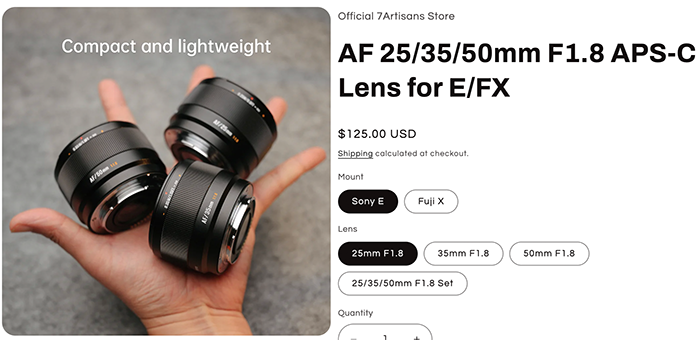
You can now preorder them for $125 each at 7Artisans store, Amazon and BHphoto.

You can now preorder them for $125 each at 7Artisans store, Amazon and BHphoto.
Great news, everyone! Sony has just registered a new camera in China. The code is “WW847606” and this is what we’ve learned from the information shared by Sony:
I have heard from reliable sources that the FX3II is indeed ready. So my personal guess (not a 100% confirmed rumor) is that it could be the Sony FX3II with a new, partially stacked low-resolution sensor. The Nikon Zr and Canon C50 are more affordable and, in many ways, outperform the FX3, which is now four years old. So it simply makes sense for Sony to announce this camera.
But as I said, I don’t have 100% confirmation from multiple reliable sources yet, and what makes sense in my head may not make sense to Sony :)
What are the other candidates?
I think the Sony A7rVI will most likely be announced in October/November, while I haven’t heard anything about a new A7sIV. There’s also a small chance that it could be the ZV-E1II, the A6900, or the A7cII, but again, I have no information.
Now let me know what you hope to see, and in the meantime, I’ll try to get 100% confirmation on this new camera and its possible specs. Stay tuned!
–
To share rumors please reach out using my anonymous contact form or contact me via eMail, Signal, Telegram. Thanks!
To not miss any new rumor subscribe our Newsletter:
Social Networks:
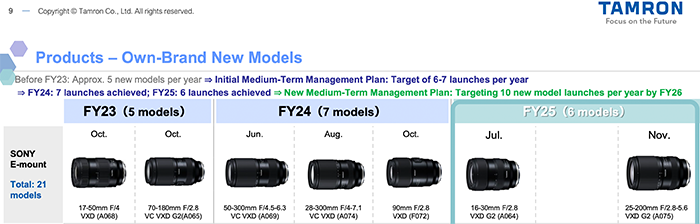
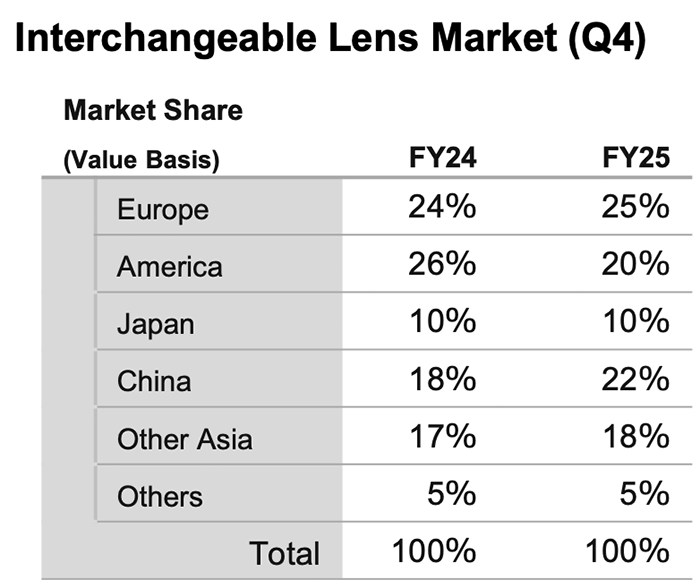
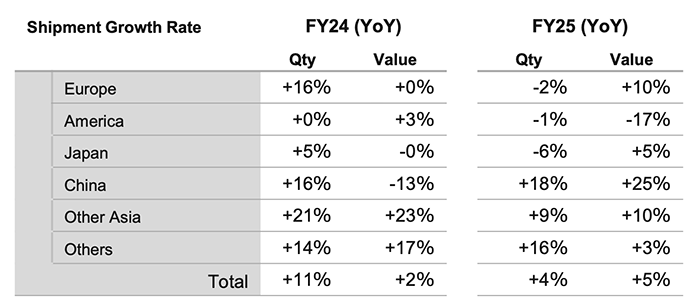
Tamron has published its full 2025 financial report. Sales and forecasts are down, but Tamron still plans to launch 10 lenses in 2026. However, it is important to note that this number includes several versions of the same lens with different mounts. So the number of truly “new” lenses could be 3 or 4.
Here is the info about their market share:
And this their info about shipments:
Yodobashi listed the Top 10 Best-Selling cameras in second half of January:
And Kitamura listed the Top 10 Best-Selling camera for the whole month of January:
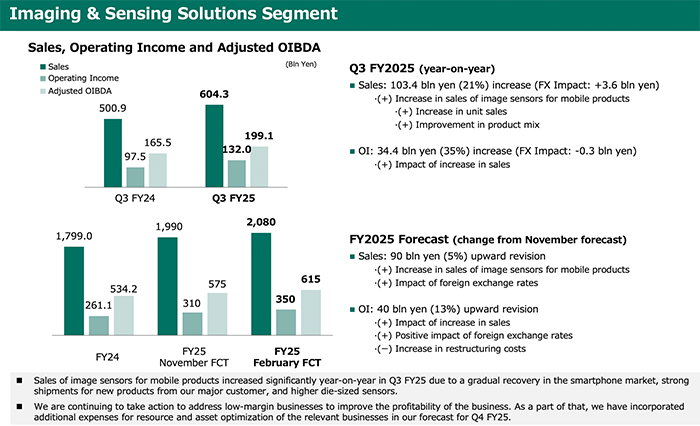
Sony published the full Q3 financial report. That’s what they had to report about the imaging business:
Despite a continued decline in sales in China due to reduced government subsidies and weakness in the overall market during the shopping season for Singles’ Day, demand in the global interchangeable lens camera market during the quarter remained strong year-on-year, mainly in Asia.
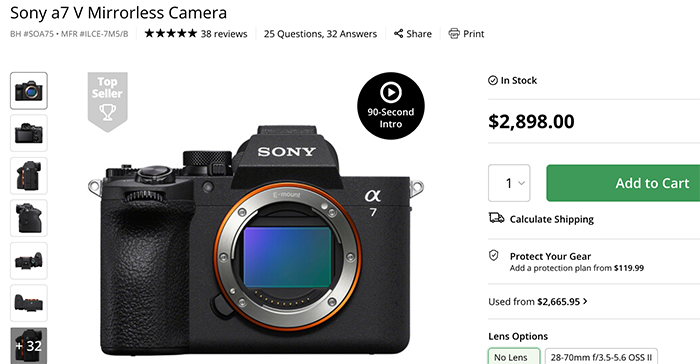
The α7 V, released in December, has been selling well as a new product for the volume zone of the full-frame mirrorless single-lens reflex camera market, and we expect it will continue to contribute to sales in the fourth quarter ending March 31, 2026 (“FY25 Q4”).
One more good news regarding the worldwide memory shortage:
Regarding the impact of the situation in the market for memory, we are almost in a position to secure the quantity we need through the year-end selling season of next fiscal year. We will continue to monitor the situation while working to minimize the impact on profitability.
Hopefully this means there are no delays on the 2026 camera roadmap!
–
via DClife
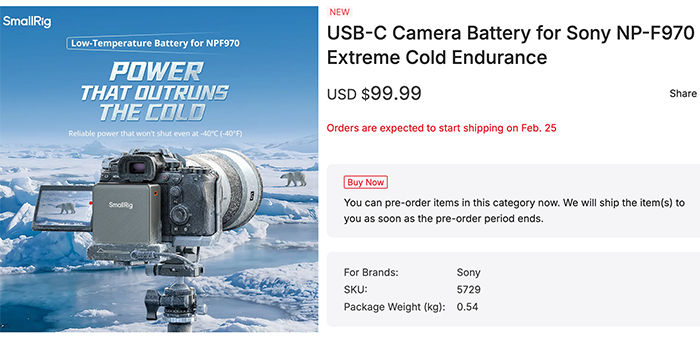
Smallrig announced th enew USB-C Camera Battery for Sony NP-F970 Extreme Cold Endurance you can preorder on the Smallrig store.
Extreme Cold Weather Operation: Engineered to discharge at temperatures as low as -40°C, providing reliable power without the need for external heating solutions.
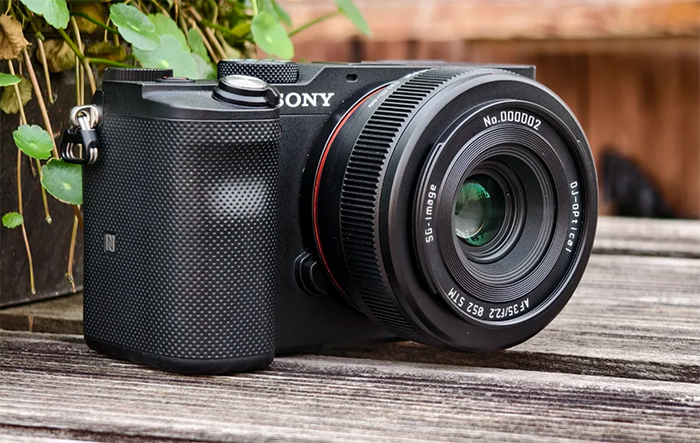
The new SG-image 35mm f/2.2 lens has been launched in China and already sold out. I don’t know when the lens will be available internationally but there are no preorder options yet on SG-image Amazon store.
Chinese sources claim that efforts are underway to increase production capacity to meet user demand.