Pinhole Pro Max – The Most Advanced Pinhole Lens In The World

Share

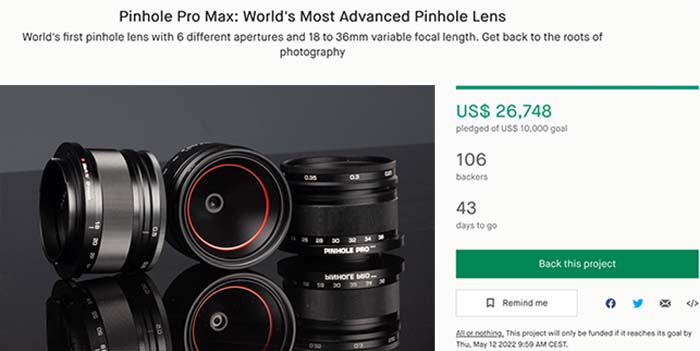
Starting from today you can preorder the world’s most advanced pinhole lens on Kickstarter (Click here to read all details).

Here is the product video:

Press text:

Our experts have created the world’s firs t multi-aperture viable focal length dual adjustment design. This revolutionizes the Pinhole lens industry as no other company has ever come close to what we achieved with our upcoming release.

Pinhole Pro Max – The Most Advanced Pinhole Lens In The World

March 22, 2022. After a small break, Thnigyfy is proud to announce the launch of the Kickstarter campaign for the newest addition to the Pinhole Pro family – Pinhole Pro Max.

Since its triumphant debut on Kickstarter with Pinhole Pro (first in the Pinhole Pro series) back in 2016, the company has successfully conquered the niche of pinhole lenses and strengthened its position as such with 2 more Kickstarter launches for Pinhole Pro ($329,287 raised) and Pinhole Pro X ($462,923 raised). With more than 10,000 products delivered throughout the past 6 yeast, Thingyfy is the most trusted camera equipment producer among crowdfunding backers.
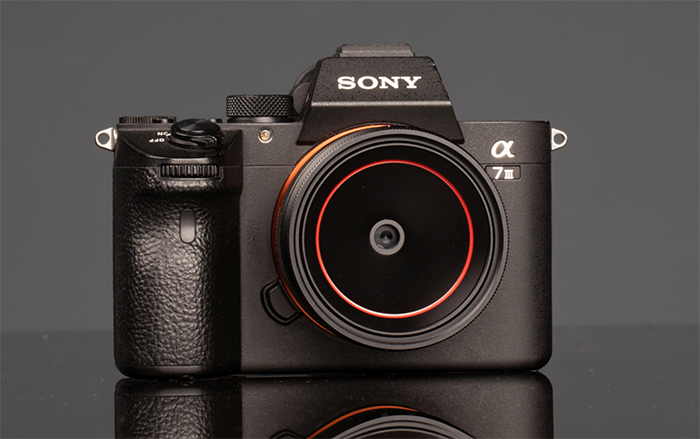
Pinhole Pro Max is the world’s first successful attempt at combining six apertures and variable focal lengths in one lightweight and durable lens design. This is the most advanced pinhole lens in the world getting people back to the roots of photography.
KEY FEATURES.

Pinhole is photography and videography art in its most original form. However, achieving those unforgettable aesthetics requires high precision engineering and modern state-of-the-art manufacturing technologies.

  • 6 apertures: The Pinhole Pro Max comes with different aperture sizes, that allow you to have more creative control over the images that you capture. It encapsulates from 0.15 to 0.5mm precision pinhole aperture, made with micrometer accuracy.
  • Variable Focal Length: The Pinhole Pro Max is the world’s first multi-aperture camera lens that comes with a variable focal length adjustment design, making it THE most advanced pinhole photography and video equipment in the world.
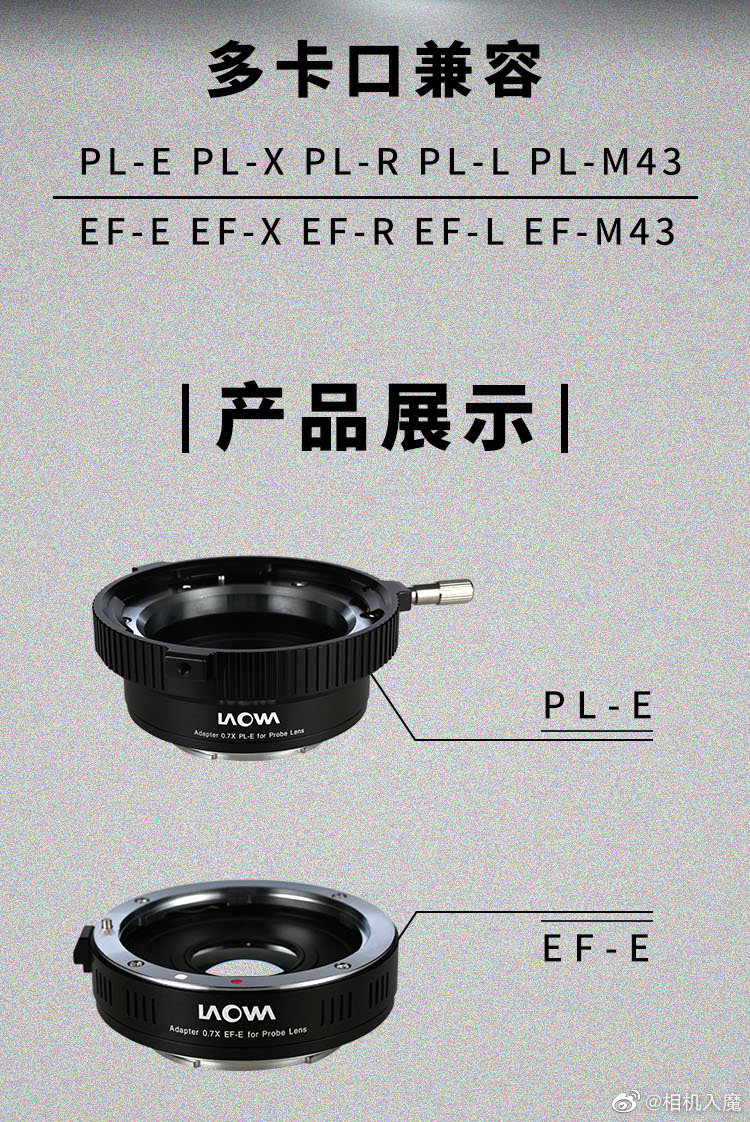
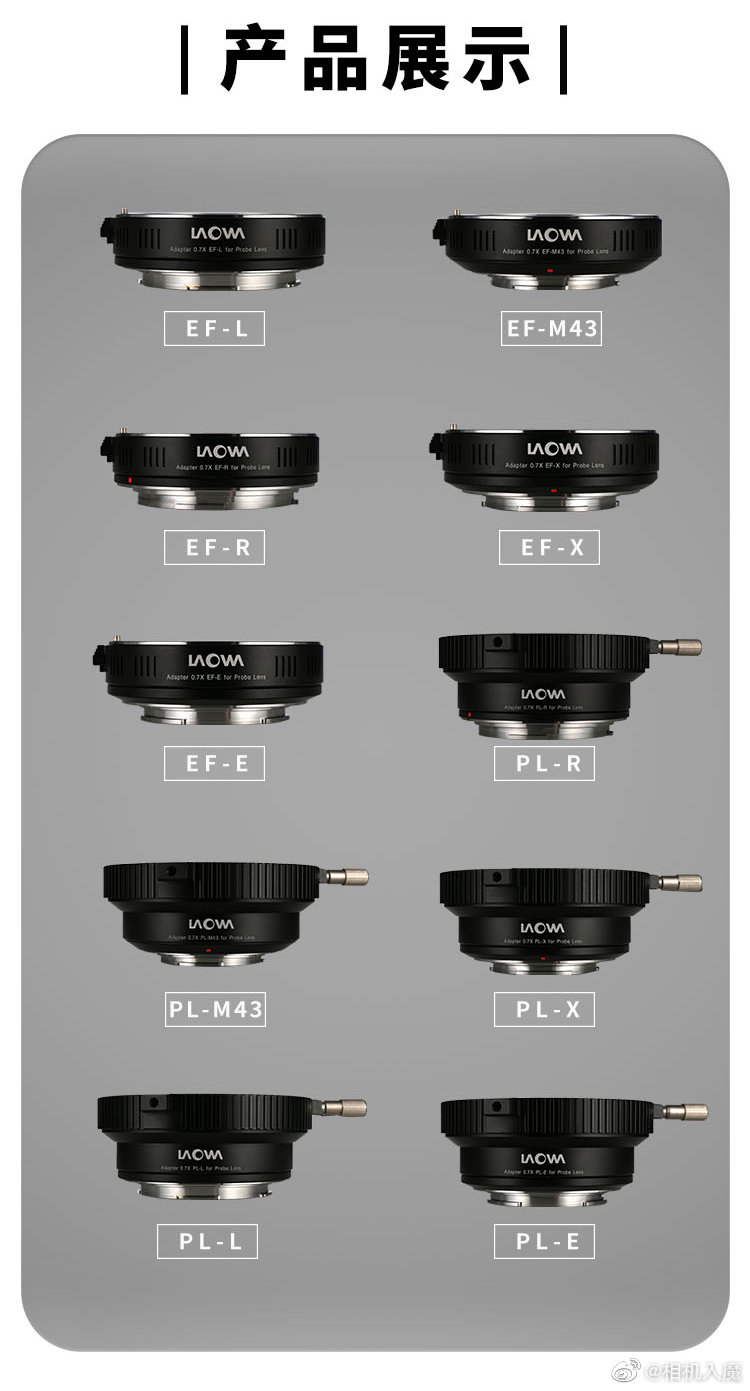
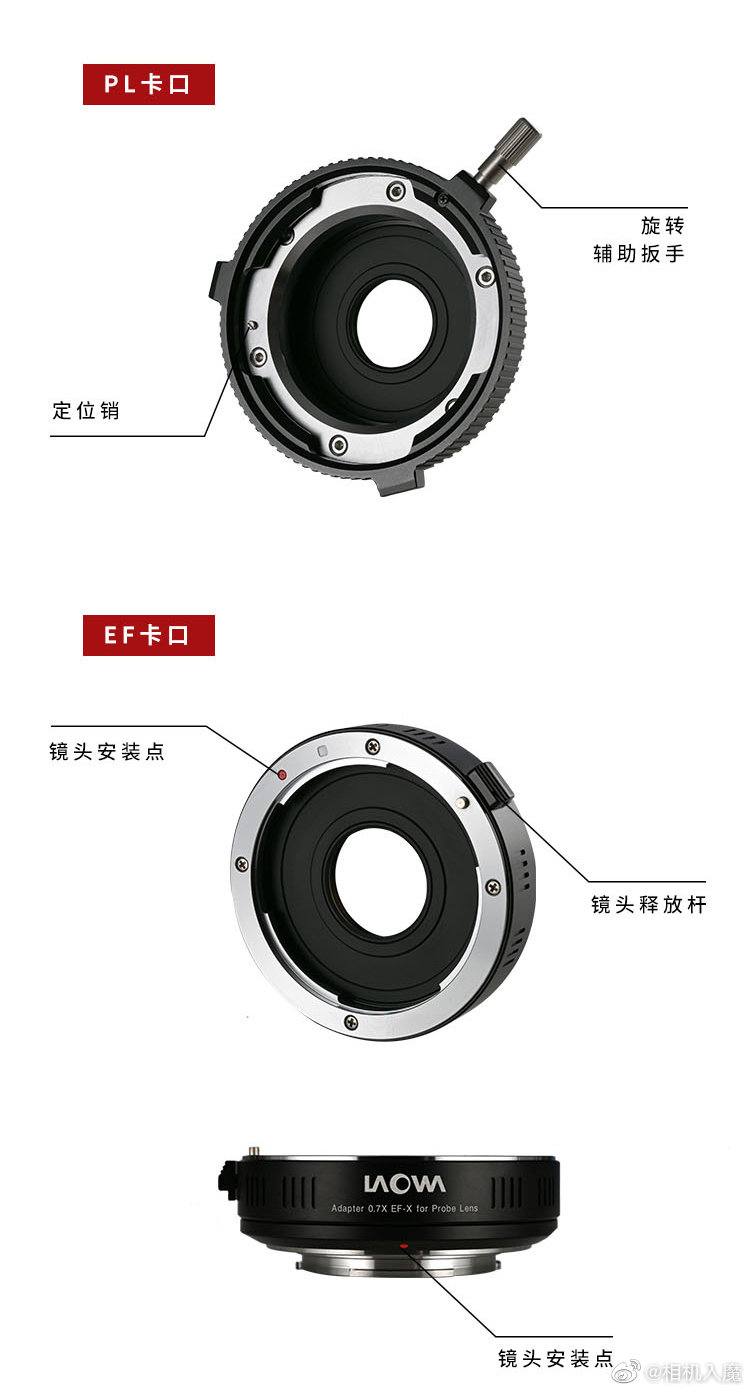
  • Universal lens mount: You can use your Pinhole Pro Max with a camera, regardless of the mount type. Thanks to its universal lens mount add-on it fits all popular camera mounts. This is advantageous because it allows photographers and videographers to use this lens on a variety of cameras without having to purchase multiple lens options.

You’ll also be surprised at how lightweight and minimalistically solid is the body carrying this never-before-seen lens. Your new lens is cut out from a single piece of aviation aluminum, using the precision CNC and micro-drilling. It’s also incredibly compact (up to 171gr) and small, becoming a perfect attribute to your next journey around the world or a friend/family gathering.

Whether you are a professional photo/videographer looking for enhancing your gallery collection with artistic and out-of-the-box visuals or an amateur with little or no skills in editing, Pinhole Pro Max is the perfect piece of equipment to deliver the next-level retro-style content you need.

TECHNICAL SPECIFICATION


Focal Lengths:  50mm (DSLR) and 26mm (Mirrorless)
Pinhole Sizes:  0.1mm, 0.15mm, 0.2mm, 0.25mm,0.3mm, 0.35mm, 0.5mm, 0.8mm
Lens Mount:  Canon EOS/EF, Nikon F, Sony A, Sony E, Fuji X, Micro 4/3 (MFT), Pentax K
Threads:  58mm
Front Diameter:  62.2mm
Total Depth: 50mm
Weight 171g (DSLR) 161.5g (mirrorless)
Body:  Anodized Aluminum Alloy


AVAILABILITY:

Pinhole Pro Max is currently available on Kickstarter with a starting price point of $259. (Limited time offer)

Share

RUMOR: The new Sony 24-70mm f/2.8 GM II will be announced in April

Share

I can now confirm with 99,999% certainty the new Sony 24-70mm f/2.8 GM II will be announced in April. No info on pricing yet.

One of the three sources that told me about this lens sent me the following info:

This will come out in April, and the size, weight, and volume have decreased. The image quality is similar.

Share

Sony Tidbits…

Share


3 Months with Sony A7IV – Extended Review

Today deals at Amazon, BHphoto, Adorama, Amazon DE, Amazon UK, Amazon FR, Amazon IT.
Carl Zeiss Tessar T * 45mm F2.8 tested on the SOny A7r at Sasha.
People Have No Idea What a DSLR Actually Is (PetaPixel).
Sony Venice 2: Skintones, 8.2K 16 Bit X-OCN, 90 fps Slowmotion, S-Log3-LUT … (Slashcam).
Tamron Test and Try Day – 150-500mm Sony Fit at Prohides.
Bokeh vs. Sunstars (Explora).
How to Create a Glow Effect on Photos (42West).
Personal photos and tests from SAR Admin Andrea on Instagram, Facebook, Flickr and 500px.

Join the new Sony Alpha Camera Facebook group.
To get news from our Forum subscribe that RSS feed.
I kindly invite you all to follow our RSS feed, follow us on Facebook and Twitter to not miss news and rumors

We have our own Facebook camera groups you can join to discuss the upcoming new cameras in detail:
Sony A1 group.
Sony A9 series group.
Sony A7r series group.
Sony A7s series group.
Sony A7 series group.

Share

Wise Advanced Launches Upgraded SD Line with World’s First V90 Class 512GB

Share

SD-N series

Wise announced the world’s first V90 Class 512GB card and you can preorder these cards at BHphoto (Click here).

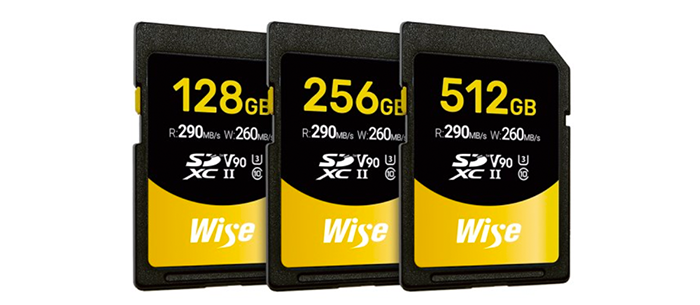
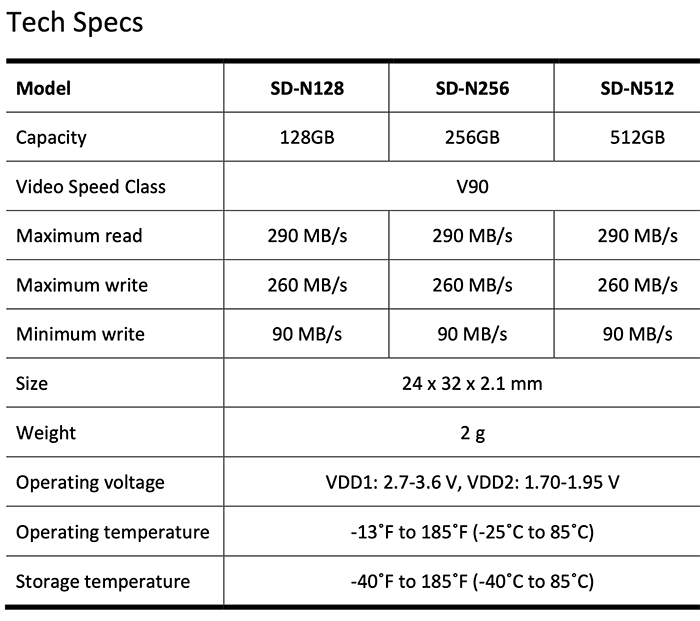
Taipei, Taiwan – March 22, 2022 – Wise Advanced introduced a new series of V90 standard SDXC UHS-II memory media in 128GB, 256GB and the world’s first 512GB.
By taking advantage of newer chips, software and 3D NAND flash memory, the maximum capacity is increased to 4 times larger than the original model while simultaneously being able to support minimum sustained writes of 90 MB/s.
Rather than spending the majority of the company’s energy and resources on developing the latest form factor – the SD Express – it chose to focus on current demands.
“The SD Express could be a rising star in the future when more cameras apply this technology. But in the current landscape, we believe the current SD card format will continue to dominate the market, especially since Apple has put back the built-in SD UHS-II slot in the latest MacBook Pro,” said Frank Wang, product manager of Wise Advanced.
The Wise SD-N series memory media is expected to be available in mid-April 2022.

Share

The big Sony medium format system talk: 53.5mmx40mm sensor with 150 and 200mp, lots of f/1.7 primes and very expensive!

Share

Before we get into this speculative bit about the Sony medium format system I kindly invite you to subscribe my new Youtube channel (click here). And now let’s get onto it:

It’s about time to talk about facts, myths and rumors about the possible future Sony medium format system. In my video above I explain everything we know so far and below you can find some facts and rumors. It’s important to disclose ASAP that there is no hard fact yet that convinced me the medium format system is coming any time soon. But there is some increasing background noise, and some patents that gives us some breadcrumps on how such a system might look like:

Sony statements on Medium Format:

Back in 2017 Sony manager said that at least for now they rule out the possibility to launch a medium format camera. The reason is that it takes a lot of time and resources to develop a new system with cameras, lenses and accessories. At the same time Sony they have all the necessary resources (knowledge and components) to make such a medium format camera if they would like to do it.

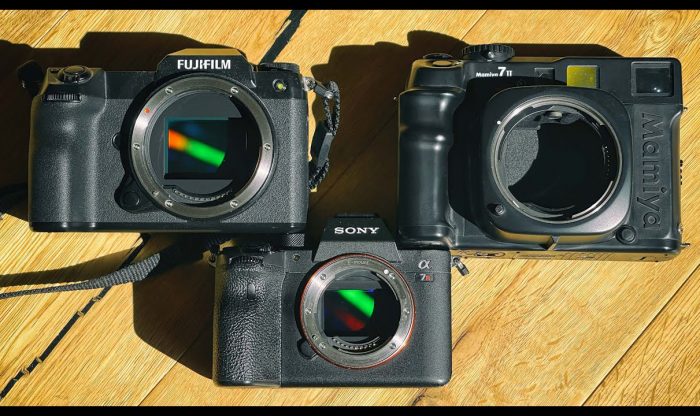
One image: Fuji GFX100s, Mamiya 7II and Sony A7rIV

But since 2017 may new patents have been published by Sony and here is a quick roundup:

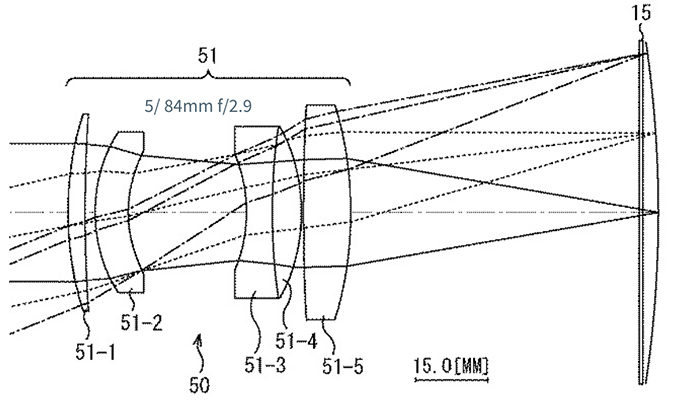
Here is one of the many Sony f/2.8 medium format lens patents. In detail we got this:

  • 387mm f/2.8 (lens length: 679mm) – in Full Frame terms this is a 240mm f/1.7 (using online calculator)
  • 323mm f/2.8 (lens length: 576mm) – in Full Frame terms this is a 200mm f/1.7
  • 258mm f/2.8 (lens length: 380mm) – in Full Frame terms this is a 160mm f/1.7
  • 161mm f/2.8 – in Full Frame terms this is a 100mm f/1.7
  • 84mm f/2.9 (lens length: 123mm) – in Full Frame terms this is a 52mm f/1.7 (it would be 2cm longer than the Zeiss 50mm f/1.4 FE)

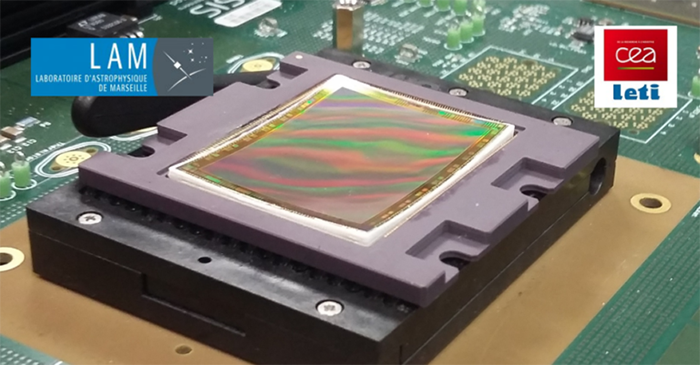
The extraordinary feature of those lens patents is that they are all designed for curved sensors. Sony patented some curved sensors design (example here). This includes also Full Frame curved sensors (example here). Some other company like for example CEA-LETI already displayed some working prototype (more about this here). While Sony already showed an image sample shot on a curved sensor back in 2014 (see here).

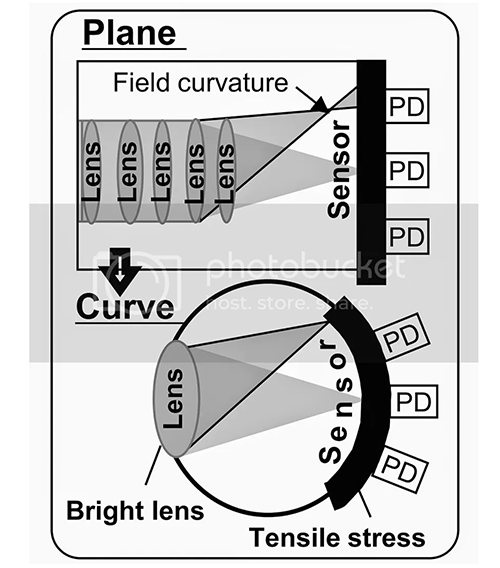
VLSI Symposia tipsheet (via ISW) explained better how this sensor works:

Curved CMOS Image System: When light transmitted by a lens strikes a perpendicular target such as a CMOS image sensor, it forms a circle of light called an image circle. It’s difficult for a flat (planar) CMOS image sensor to deliver high image sensitivity at high resolution (highly scaled pixel pitch) because of the fundamental physical limit known as quantum efficiency. To break through that physical limit and to achieve higher sensitivity anywhere within the image circle at higher resolution, Sony built and will describe an imaging system that comprises a hemispherically curved, back-illuminated CMOS image sensor (BIS) and integrated lens. It doubles the sensitivity at the edge of the image circle while increasing sensitivity at its center by a factor of 1.4, with a 5x reduction of dark current (Jd) compared to a planar BIS. Moreover, a common problem known as lens field curvature aberration (Afc) is mitigated by the curved sensor itself, and so the curved BIS enables higher system sensitivity with a brighter lens with a smaller F number (Fn) than is possible with a planar BIS. In addition, by controlling the tensile stress of the BIS chip to produce a curved shape in the first place, the energy band-gap (Eg) is widened and a lower Jd is achieved. (Paper T2.1, “A Novel Curved CMOS Image Sensor Integrated with Imaging System,” K. Itonaga et al., Sony)

Recent medium format Rumors:

The only rumor I got from solid sources says that Sony is working on a new kind of camera. But we shouldn’t get too excited about that wording. It could mean a new kind FF camera too. All other rumors are from anonymous sources and therefore at high risk of being B.S. The last two I got tell us this:

Posted on SAR on December 13:

Simultaneous announcement about curved sensor medium format camera development (2 cameras, 150mp and 200mp, 9-12 prime lenses, very expensive, to follow quickly)

Posted on SAR on December 13:

the medium format system Sony will release in 2 years has not curved sensor, its a new developed 200mp 54×36 sensor in a new mount, Sony will release an adapter to use E lenses (just they can say it had a lot of compatibility lenses cause the system will be released with only 3 primes) and will be a system without mechanical shutter with flash sync faster than anything in the market by far, its a system targeted for ultimate studio work

The business case for a Sony medium format system:

The Sony A1 and the Fuji GFX proved that people is willing to pay a lot of money for exciting cameras. In all those years of constant camera market decline only the high end stuff keeps selling. Sony might have been motivated to be bold and launch a MF system.

Wrap Up:

If patents are any indication for the direction Sony wants to go with their medium format system than we can assume this:

  •  The sensor is 2.2x larger than FF with 53.5mmx 40mm size and 0,65 crop factor. This is larger than the current Fuji GFX sensor (44x30mm, 1.7 larger than FF and 0,79 crop)
  • All these sensors are curved. This allows the lenses to be much smaller because they don’t need additional glass to correct for distortion. And it allows to get the same sharpness all across the frame. The f/2.8 (FF equivalent f/1.7) lenses are barely larger than Full frame f/1.4 primes.
  • The patented lenses are all primes with f/2.8 aperture. This is equivalent to f/1.7 in Full Frame terms.

So you see, Sony seems to aim for a proper 645 sensor with curved sensor tech to beat the Fuji GFX system in terms of image quality while still maintaining a relatively compact lens system. The trade off is that such curved sensors are eventually going to be very costly to produce.

It’s all speculation for now, and patents are no proof for real stuff happening. But I hope that within the next few months we will finally learn more if Sony is serious about this. Maybe after reading this known sources can give me some more info about what’s going on with Sony’s medium format plan ;)

Make sure to subscribe my new Youtube channel, to follow me on Twitter, Instagram and on Facebook.

Share